
Ancient myths continue to shape contemporary poetry, yet their function has significantly changed. Where mythological heroes once embodied moral strength and unquestioned valor, they now serve as tools for examining inner experience. This shift is essential for understanding how literature reflects cultural transformation and reconsiders ideas of heroism, power, and identity. The topic is especially relevant for readers interested in poetics, cultural reinterpretation, and the evolving role of classical heritage in modern literary thought.
Dismantling the Heroic Model: From Feat to Vulnerability
In classical tradition, the hero is an exceptional figure. His actions are grand, his suffering elevated, his fate tied to cosmic forces. Achilles, Odysseus, Prometheus—each represents strength, dominance, and decisive action. Even their deaths affirm their greatness.
Contemporary poetry approaches these figures differently. The heroic model is reconsidered in light of twentieth-century historical trauma—world wars, totalitarian regimes, mass violence. After such experiences, heroism no longer appears self-evidently admirable. Acts of greatness are viewed alongside their destructive consequences.
Odysseus as a Figure of Lost Identity
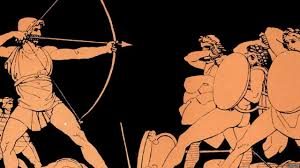
In modern reinterpretations, Odysseus often appears not as a triumphant returnee but as a displaced individual. His homecoming becomes a psychological crisis. He no longer fully belongs either to the world of wandering or to Ithaca. The story transforms from an epic of victory into an exploration of fractured identity.
This shift reflects contemporary experiences of migration, exile, and cultural dislocation. The myth becomes a way to express a simple but difficult truth: returning home does not always restore wholeness.
Achilles and the Cost of Anger
Achilles in contemporary poetry loses the aura of the flawless warrior. His rage is interpreted as the consequence of trauma and grief rather than pure strength. The death of Patroclus marks emotional rupture instead of heroic motivation.
Through this transformation, the mythological hero becomes a vehicle for exploring psychological fragility. Modern literature increasingly focuses on the internal consequences of violence rather than its glory.
 Myth as a Language of Inner Psychology
Contemporary poets frequently use mythological figures as metaphors for psychological processes. Ancient characters become symbolic frameworks for discussing fear, guilt, memory, and identity.
Orpheus and the Impossibility of Reclaiming the Past
In classical myth, Orpheus conquers death through art. In modern poetry, he often represents the artist confronting irreversible loss. His backward glance becomes a symbol of humanity’s inability to release the past.
In cultures shaped by collective trauma, memory plays a central role. Orpheus embodies the tension between remembrance and survival. The attempt to recover what is lost may destabilize the present.
Medusa as Defensive Transformation
In antiquity, Medusa represents monstrosity. Contemporary reinterpretations frame her petrifying gaze as a defense mechanism. Monstrosity becomes the result of violence rather than inherent evil.
This reading aligns with social and gender discourse. The myth allows poets to examine how societies construct “dangerous” identities and how trauma shapes the self.
Icarus and the Limits of Ambition
Traditionally, Icarus symbolizes daring ambition. In contemporary poetry, his fall often signals the consequences of ignoring boundaries. Flight becomes a metaphor for unchecked aspiration.
In an era of technological acceleration and performance pressure, Icarus reflects the risks of overreach. His story speaks to burnout, collapse, and the fragile balance between ambition and responsibility.
Secondary Voices and the Revision of Hierarchies
A significant feature of modern myth reinterpretation is the shift of focus toward marginal or secondary figures. This mirrors a broader cultural interest in previously silenced perspectives.
Penelope as an Agent of Choice
Penelope, long defined by fidelity, gains interiority in contemporary poetry. Waiting becomes an act of agency rather than passive endurance. Some poets question whether loyalty is a freely chosen virtue or a social expectation.
Through this lens, myth becomes a framework for analyzing gender roles and autonomy.
Cassandra and the Crisis of Being Unheard
Cassandra emerges as a figure of ignored knowledge. Her prophecy resonates with modern contexts such as ecological warnings, scientific predictions, or political dissent.
The myth illustrates a clear cause-and-effect dynamic: the refusal to listen leads to catastrophe. Cassandra symbolizes the ethical responsibility to acknowledge inconvenient truths.
Ariadne and the Experience of Autonomy
In classical myth, Ariadne appears abandoned. Contemporary reinterpretations often portray her isolation as the beginning of independence. Loss becomes a condition for self-discovery.
This perspective reflects modern emphasis on individuation and personal development beyond prescribed narratives.
Cultural Context: Why Heroism Has Lost Its Centrality
The transformation of myth is rooted in historical and cultural change. The twentieth and twenty-first centuries have witnessed a crisis of absolute values. After ideological extremism and large-scale destruction, societies approach the concept of the “great hero” with caution.
Contemporary poetry tends to distrust monumentality. Instead, it examines ambiguity, contradiction, and internal tension. Myth becomes a flexible tool for cultural reflection rather than a fixed model of virtue.
The development of psychology and psychoanalysis has also shaped interpretation. Heroes are now viewed as complex subjects rather than symbolic ideals. This explains the growing attention to trauma, memory, and identity in poetic reworkings of ancient narratives.
Key Takeaways
-
Contemporary poetry shifts myth from heroic celebration to psychological exploration.
-
The heroic model is reassessed in light of twentieth- and twenty-first-century historical trauma.
-
Mythological figures function as metaphors for internal conflict and social dynamics.
-
Secondary characters gain voice, reflecting a revision of cultural hierarchies.
-
Modern reinterpretations are influenced by psychology, gender theory, and cultural criticism.
-
Ancient myths remain relevant because of their symbolic adaptability.
Conclusion
Contemporary poetry does not abandon classical myth; it transforms it. Heroic grandeur gives way to psychological depth and moral complexity. Ancient characters become instruments for examining modern experience rather than objects of admiration. Myth endures precisely because it evolves, offering a language capable of articulating the uncertainties and contradictions of the present.
Related posts:
- The Hero’s Inner Journey: Reimagining Myth in Tennyson’s ‘Ulysses’
- The Role of Identity in Contemporary Poetry
- Victorian Heroism Reconsidered: Duty and Identity in ‘The Charge of the Light Brigade’
- Women Characters in T.S.Elios Poetry
- Contemporary American Poetry is Representative
- Emigration and Poetry: How Poets Find a New Language in Another Culture