
The work of Thomas Hardy occupies a distinctive place in late nineteenth- and early twentieth-century English literature due to its unique combination of philosophical fatalism and deep attention to rural life. His writings do not merely depict the countryside as a backdrop; they transform it into a space of thought, where human destiny unfolds through interaction with nature, tradition, and time.
This topic is important because it helps explain how literature reflects the transition from a traditional agrarian world to an industrial society. Through Hardy’s work, we can observe how human consciousness changes when familiar structures of life begin to collapse.
Fatalism as the Foundation of Hardy’s Artistic World
Fatalism in Hardy’s works appears not as an abstract philosophical idea but as a lived experience of his characters. They are often confronted with forces beyond their control: chance, social constraints, and natural conditions.
At the same time, Hardy’s fatalism does not imply passivity. His characters act, make decisions, and attempt to shape their own destinies. Yet their efforts frequently lead to outcomes opposite to what they intended. This creates the impression that the very structure of the world works against them.
Chance and Necessity
One of the key features of Hardy’s fatalism is the combination of randomness and inevitability. Events may seem accidental, but in retrospect they form an unavoidable chain.
A seemingly minor coincidence—a meeting, a letter, a delay—can become a turning point in a character’s fate. This produces a sense of tragic irony: what appears random ultimately reveals itself as necessary.
Fate Without Transcendence
Unlike classical tragedy, where fate is often linked to divine will, Hardy’s universe lacks a clear metaphysical foundation. There is no higher order guaranteeing justice.
This intensifies the drama: suffering is neither justified nor compensated. It exists as an inherent part of reality.
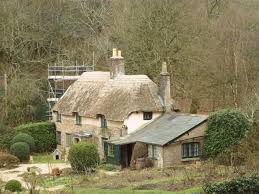 Rural Space as a Form of Consciousness
Hardy is known for his depiction of Wessex, a fictional region based on real rural areas of England. However, this space is important not only geographically but also as a mode of perception.
Rural life in Hardy’s works shapes a particular type of consciousness, especially in its relationship to time and community.
Temporal Depth and Cyclicality
In the countryside, time is experienced as repetition rather than linear progress. Seasons change, agricultural work recurs annually, and traditions are continuously reproduced.
This creates a sense of stability, but also of limitation. Individuals become embedded in a structure that is difficult to alter.
Collective Pressure
The rural community plays a significant role in shaping individual lives. Actions are judged not only personally but through collective norms.
This leads to tension between personal desire and social expectation. Attempts to step outside these norms often result in isolation and tragedy.
Conflict Between Tradition and Modernization
A central theme in Hardy’s work is the clash between traditional rural life and the forces of modernization. This conflict affects not only economic structures but also ways of thinking.
Technological development, social mobility, and changing institutions gradually undermine the old order. Characters find themselves in a transitional state where established rules no longer apply, yet new ones have not fully emerged.
This instability intensifies the sense of uncertainty. Individuals lose their familiar points of reference and must navigate a world that no longer offers clear guidance. Fatalism thus takes on a new dimension: it is no longer rooted in tradition, yet not alleviated by faith in progress.
Nature as a Participant in Tragedy
In Hardy’s works, nature is not a passive background but an active force influencing events.
On one level, nature appears indifferent to human fate. Weather conditions, seasonal changes, or random natural occurrences can drastically alter the course of life. This emphasizes human vulnerability.
At the same time, nature often reflects or intensifies the emotional state of characters. Landscapes can mirror tension or create contrast with human drama. In both cases, they contribute to the overall meaning of the narrative.
Female Characters and Social Determinism
Female figures hold a central place in Hardy’s work. Through them, he explores the constraints imposed by society and the extent to which social norms shape individual destiny.
Women in Hardy’s fiction are often in a more vulnerable position. Their lives depend heavily on reputation, marriage, and public opinion. Violating social expectations can lead to severe consequences.
Yet these characters are not passive. They possess strong individuality and strive for autonomy. The conflict between their inner freedom and external limitations becomes a key source of tragedy.
Narrative Strategy and the Sense of Inevitability
Hardy employs specific narrative techniques to reinforce the sense of inevitability. He often foreshadows events, giving readers hints about what is to come and creating the impression that the outcome is already embedded in the structure of the story.
Irony of fate plays a crucial role: characters, in their attempts to achieve happiness, inadvertently bring about their own downfall. This highlights the limits of human control.
The progression of events is gradual but relentless. Tension builds over time until it becomes clear that the tragic outcome was unavoidable.
Rural Consciousness and the Perception of Fate
Hardy’s fatalism is closely linked to the mindset of his characters. Rural consciousness is shaped by tradition and repetition, which influences how fate is understood.
People tend to perceive events as part of an established order, even when that order proves unjust. This does not eliminate resistance, but it constrains its scope.
When this familiar system collapses, characters experience a sense of loss and disorientation. They find themselves in a world where old explanations no longer hold, and new ones have yet to take form.
Key Takeaways
- Thomas Hardy combines philosophical fatalism with a nuanced depiction of rural life as a form of consciousness.
- Fate in his works emerges from the interplay of chance and inevitability rather than divine design.
- Rural society imposes collective norms that limit individual choice.
- Modernization disrupts traditional structures, increasing instability and uncertainty.
- Hardy’s narrative techniques create a strong sense of inevitability and tragic outcome.
Conclusion
The work of Thomas Hardy demonstrates how literature can explore the complex relationship between fate and human consciousness. His fatalism is grounded in a specific historical moment, when the traditional rural world confronts inevitable transformation.
In this context, the countryside becomes more than a setting—it becomes a way of thinking through which the tragic dimension of life is revealed. Hardy portrays individuals struggling to find meaning in a world increasingly shaped by forces beyond their control.
Related posts:
- Analyse the poetry of Thomas Hardy
- The Interplay of Personal and Political Themes in Elizabeth Barrett Browning’s Major Works
- Resistance and Racial Identity in Claude McKay’s Works
- Idealism and Despair: The Human Condition in Tennyson’s Major Works
- Domicilium by Thomas Hardy
- Heredity by Thomas Hardy