
Alfred, Lord Tennyson is often celebrated for his mastery of verse, yet his significance extends beyond lyrical elegance to a profound engagement with the moral and cultural conscience of Victorian England. His poetry positions the poet not merely as a chronicler of emotion or observer of nature, but as a prophetic voice, mediating between societal expectation, ethical reflection, and enduring human concerns. This article explores how Tennyson’s moral imagination shapes his work, demonstrating how his poetic vision addresses questions of duty, virtue, and collective responsibility while resonating with contemporary readers seeking insight into human character and social ethics.
The Poet’s Role in Victorian Society

Victorian England was a period of profound social transformation. Industrialization, expanding empire, scientific discovery, and shifting class dynamics created new moral questions and uncertainties. Within this context, poets were often seen as moral guides and interpreters of human experience, with a responsibility to illuminate ethical truths.
Tennyson embraced this prophetic role, articulating a vision in which poetry extends beyond personal expression to societal reflection. His work interrogates notions of courage, duty, grief, and moral agency, positioning the poet as a mediator between individual conscience and collective understanding.
Ethical Authority through Art
Unlike conventional didactic literature, Tennyson’s authority arises from artistry rather than direct instruction. By embodying moral reflection within rhythm, imagery, and narrative, he demonstrates that ethical insight can emerge from aesthetic experience. The poet’s moral voice is persuasive precisely because it is integrated with imaginative and emotional engagement.
Moral Imagination and Ethical Inquiry
Tennyson’s poetry frequently explores moral complexity, emphasizing the interaction between personal conscience and broader ethical frameworks. His imaginative vision allows readers to engage with challenging questions in nuanced ways.
The Interplay of Duty and Desire
In works such as Ulysses, Tennyson examines the tension between personal longing and social responsibility. Ulysses’ restless desire to explore contrasts with his obligation to govern and care for his people, illustrating how ethical action often requires negotiation between competing impulses. The moral imagination is exercised not through simplistic choice but through reflective engagement with conflicting duties.
Grief, Loss, and Ethical Reflection
In Memoriam A.H.H. transforms personal mourning into universal ethical inquiry. Tennyson interrogates the meaning of life, human suffering, and moral purpose, demonstrating that grief can catalyze ethical insight. Through structured reflection and poetic form, he models how personal experience can inform collective understanding.
Prophetic Vision and Social Commentary
Tennyson’s prophetic voice extends to social and historical observation, using narrative and metaphor to illuminate ethical concerns within the broader Victorian context.
Historical Consciousness
Poems such as The Princess and Locksley Hall engage with contemporary debates over gender, education, and social progress. Tennyson anticipates questions of reform and responsibility, offering ethical reflection on societal transformation. His prophetic imagination is grounded in awareness of historical forces, emphasizing that moral insight requires contextual understanding.
Symbol and Allegory
Tennyson frequently employs allegory to convey ethical truths. Figures such as the Lady of Shalott or Mariana serve as moral exemplars or cautionary presences, illustrating consequences of action, inaction, or moral compromise. Symbolic representation allows Tennyson to address universal concerns without reducing complexity, bridging aesthetic form and ethical meaning.
Balancing Human Frailty and Moral Aspiration
Central to Tennyson’s prophetic perspective is the recognition of human imperfection alongside the pursuit of virtue. His poetry acknowledges limitations while emphasizing moral striving.
Recognition of Limitation
Tennyson does not idealize human capacity. Characters experience doubt, temptation, and failure. By depicting imperfection honestly, he affirms the moral weight of human choice, underscoring the significance of effort, reflection, and resilience in ethical life.
The Call to Moral Action
Despite recognizing fallibility, Tennyson encourages active engagement with ethical responsibility. Courage, fidelity, compassion, and perseverance recur as central virtues. The moral imagination is thus not passive contemplation but a guide for action, connecting thought, emotion, and conduct.
Nature, Mortality, and Moral Insight
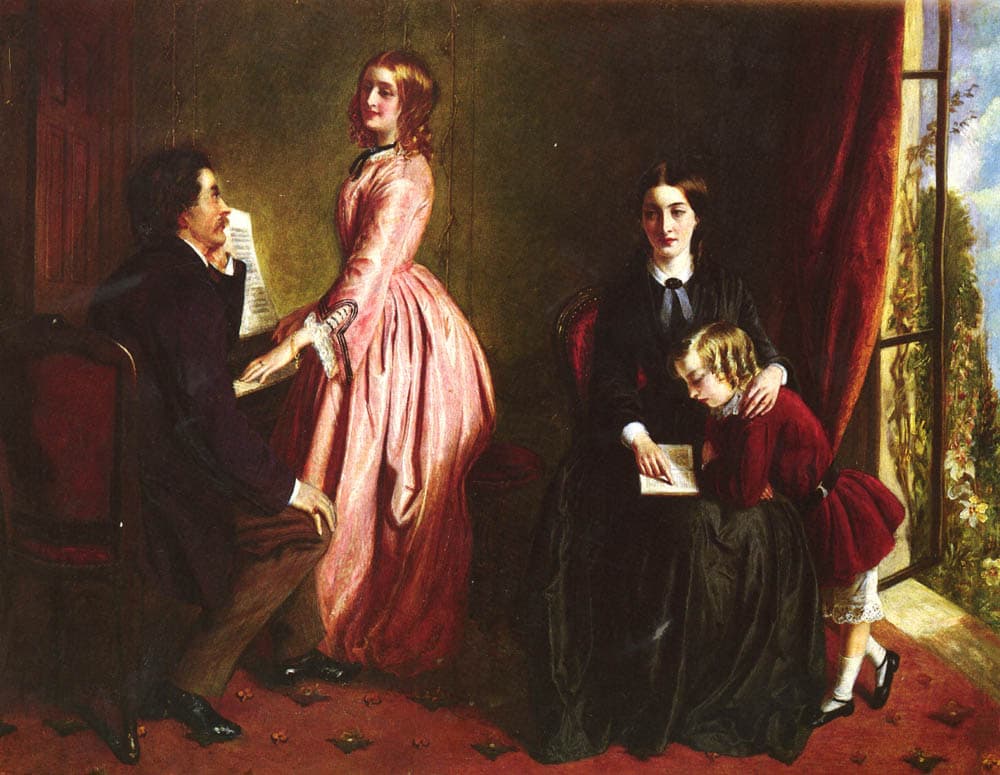
Tennyson’s prophetic imagination is closely intertwined with the natural and temporal dimensions of human experience. Landscapes, seasons, and mortality function as mirrors and mediators of moral reflection.
Mortality as Ethical Lens
Awareness of mortality deepens moral significance. In Memoriam exemplifies how the contemplation of death intensifies ethical reflection, inviting readers to consider human legacy, relational responsibility, and the fleeting nature of life. Tennyson’s verse links temporal awareness with moral urgency, highlighting how finite existence informs ethical prioritization.
Nature as Moral Mirror
Natural imagery frequently serves as an ethical analog. Calm rivers, changing seasons, or harsh landscapes reflect human conditions and ethical dilemmas. Tennyson’s careful attention to natural detail allows the poet to draw analogies between environmental patterns and moral principles, reinforcing the interconnection between observation and ethical comprehension.
The Poetic Medium as Moral Instrument
Tennyson’s artistry is inseparable from his ethical concerns. Form, meter, and imagery are not ornamental but integral to the communication of moral insight.
Structured Reflection
Poetic form organizes thought and feeling, providing a disciplined space for contemplation. Regular stanzaic patterns, measured rhythm, and careful syntax create a framework in which ethical reflection can unfold. The poem’s structure thus mirrors the ordered moral reasoning it seeks to cultivate.
Emotional Engagement and Persuasion
Tennyson’s poetry engages readers emotionally, making ethical reflection experiential rather than abstract. Empathy, resonance, and imaginative identification allow moral lessons to emerge organically, reinforcing the persuasive power of the prophetic voice without resorting to prescriptive or dogmatic instruction.
Tennyson and the Victorian Conscience
The concept of conscience is central to Tennyson’s moral vision. Victorian society valued self-awareness, ethical deliberation, and social responsibility, all of which Tennyson explores through his poetry.
Individual Responsibility
Characters in Tennyson’s verse navigate ethical dilemmas within personal and social contexts. Conscience is exercised through reflection, choice, and response to circumstance. By depicting the tension between personal desire and social duty, Tennyson foregrounds the complexity of moral agency.
Collective Reflection
Tennyson’s prophetic imagination extends beyond individual conscience to communal consideration. His poetry often addresses readers directly or situates narrative within collective experience, encouraging reflection on societal ethics, cultural norms, and shared responsibility.
Comparison with Contemporary and Preceding Poets
Tennyson’s role as moral prophet can be better understood in contrast with Romantic and early Victorian literary traditions. While Romantic poets often foregrounded individual emotion and sublime experience, Tennyson integrates emotional resonance with ethical and societal reflection. Compared to strictly didactic Victorian writers, he combines artistry with ethical vision, demonstrating that poetry can engage moral imagination without sacrificing aesthetic sophistication.
Limitations and Tensions
Tennyson’s prophetic stance is not without ambiguity or constraint. At times, ethical idealization risks distancing readers from relatable experience. Social assumptions, especially regarding gender and class, can impose limits on the universality of moral vision. Yet these tensions illuminate the careful negotiation between cultural context, imaginative aspiration, and ethical reflection that characterizes his work.
Enduring Relevance
Tennyson’s integration of poetic form, moral reflection, and historical awareness continues to resonate. His work models a form of intellectual and ethical engagement that addresses doubt, imperfection, and social responsibility. Readers encounter a vision of human experience where ethical thought is intertwined with imagination, emotion, and aesthetic perception, offering guidance that is simultaneously reflective and actionable.
Key Takeaways
-
Tennyson positions the poet as a prophetic moral guide, mediating between personal reflection and societal conscience.
-
His work integrates ethical inquiry with emotional and imaginative engagement, demonstrating how art can illuminate moral truth.
-
Characters grapple with tension between desire, duty, and ethical responsibility, reflecting human complexity.
-
Awareness of mortality and natural patterns enhances moral reflection and ethical urgency.
-
Poetic form—structure, rhythm, and imagery—supports disciplined contemplation and persuasive moral vision.
-
Tennyson balances recognition of human frailty with advocacy for moral striving, promoting active ethical engagement.
-
His prophetic imagination addresses individual and collective conscience, linking personal and social ethics.
-
Comparison with Romantic and early Victorian writers highlights Tennyson’s synthesis of aesthetic sophistication and ethical reflection.
Conclusion
Tennyson’s poetry exemplifies how artistic expression can function as a vehicle for ethical and moral insight. By positioning the poet as a mediator between human experience and societal conscience, he demonstrates the capacity of literature to engage deeply with questions of duty, virtue, and reflection. Through narrative, imagery, and structured form, Tennyson’s work models a moral imagination attuned to complexity, uncertainty, and the enduring pursuit of human understanding, leaving a lasting imprint on both literary and ethical thought.