
Langston Hughes, one of the central poets of the Harlem Renaissance, made music and rhythm the core of his poetry. His poems not only reflect the social reality of African American life but also immerse the reader in a distinctive musical rhythm closely tied to jazz and blues. Studying Hughes’s work allows us to understand how literary texts can integrate musical and cultural elements, creating a unique synthesis of artistic form and social context.
Hughes’s jazz poetry is not a mere imitation of music but a translation of rhythm, intonation, and emotional dynamics of jazz into words. It reflects the cultural heritage of the African American community and its artistic practices, forming a new type of poetic experience in which sound, pause, meter, and meaning are tightly interwoven.
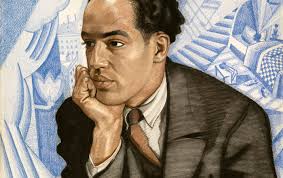 Historical and Cultural Context
Hughes lived and wrote during a period when African American culture was flourishing, particularly in Harlem in the 1920s–1930s. The Harlem Renaissance was a cultural and social phenomenon in which African American literature, music, visual art, and theater became a prominent part of American cultural life.
Jazz as a Cultural Symbol
Jazz, originating in New Orleans and spreading across the country, became a symbol of freedom, energy, and cultural identity. For Hughes, jazz was not just a musical style but a form of social expression. Jazz rhythms, improvisation, and specific musical structures were reflected in his poetry, creating a unique synthesis of sound and word.
Social Context
African Americans faced segregation, economic hardship, and restricted rights. Hughes’s poetry used music as a means of resistance, cultural preservation, and emotional expression. Jazz poetry became a tool not only for artistic expression but also for social commentary.
Rhythm and Technique in Jazz Poetry
A defining feature of Hughes’s poetry is that rhythm carries meaning. Jazz rhythm, with its syncopation, tempo changes, and improvisation, is transferred to the stanzaic and sound structure of his poems. His work includes short and long lines, variations in pauses and accents, creating a sense of musical movement.
Example: The Weary Blues
In The Weary Blues, Hughes employs repeating sound and rhythmic elements, imitating piano playing and the voice of a blues singer. Pauses and rhythmic accents create a syncopated effect characteristic of jazz. This technique conveys the characters’ emotional states and the atmosphere of Harlem clubs and streets, where music and life are intertwined.
Improvisation in Poetry
The improvisational nature of jazz is also reflected in Hughes’s poetry. He experiments with form, alters line and stanza length, and introduces free rhythm, creating the impression of a live performance and immediate engagement with the audience. Words become musical material, and rhythm becomes a carrier of emotional dynamics.
Cultural Synthesis: Music and Literature
Hughes’s poetry is a synthesis of African American musical tradition and literary form. Jazz and blues did not merely inspire his texts—they became their structural foundation. Words arranged according to jazz rhythm produce the effect of a musical composition, where emphasis shifts from theme to sound and dynamics of the text.
Folk Culture and Songs
Hughes incorporates elements of African American folk culture: songs, lullabies, rhymed narratives, and work chants. The result is poetry that is simultaneously literary and musical, cultural and social. This synthesis reflects the unique experience of the African American community and underscores the importance of cultural identity.
Conveying Emotions and Social Experience
The rhythmic structure of Hughes’s poems allows him to convey not only jazz sounds but also emotional states, social tension, joy, and suffering. Music becomes a universal language linking the personal and the collective, individual experience and cultural heritage.
Examples of Jazz and Musical Elements in Hughes’s Poetry
- Poem The Weary Blues – imitation of piano playing and blues singer’s voice through rhythm and syncopation.
- Repeating short and long lines – conveying jazz rhythmic variation and improvisation.
- Use of lullabies and folk songs – integrating African American musical tradition.
- Musical stanza structure – creating the effect of live performance and direct audience engagement.
- Rhythmic pauses and accents – enhancing the emotional impact and conveying the Harlem club atmosphere.
This list illustrates how Hughes uses musical elements to create emotional and symbolic tension, engaging readers in a multisensory dialogue with the text.
Aesthetic and Social Effects
Emotional Impact
Hughes’s poetry demonstrates that sound and rhythm can carry meaning. Jazz poetry fosters emotional engagement, conveys the atmosphere of the city, music clubs, and streets. The combination of poetry and jazz forms a unique artistic experience: the text is perceived as a musical object, and the reader or listener experiences rhythm and intonation as part of the meaning.
Social Significance
Jazz poetry preserves and transmits African American cultural heritage and serves as a form of resistance to cultural marginalization. Hughes uses musical elements not only for aesthetic effect but also to enhance social expressiveness, portraying the life, joys, and struggles of African Americans in U.S. society.
Key Takeaways
- Rhythm and musical structure are central elements of Langston Hughes’s poetry.
- Jazz poetry creates emotional engagement through syncopation, rhythmic accents, and line variation.
- Hughes’s work exemplifies the cultural synthesis of literature and African American musical tradition.
- Musical elements convey the social and historical context of African American life.
- Improvisation and rhythmic variation create the effect of live performance and immediate reader connection.
- Jazz poetry unites individual experience and collective cultural heritage, enhancing emotional and philosophical resonance.
Conclusion
Langston Hughes demonstrates that poetry can merge music, culture, and social experience. His jazz poetry transforms rhythm, sound, and word into a medium for emotional expression, cultural identity, and social commentary. Through syncopation, improvisation, and musicality, Hughes conveys the vibrancy of African American life while creating a new literary form that blurs the boundaries between literature and music.
Integrating jazz rhythm and cultural elements engages readers intellectually, emotionally, and rhythmically, offering a multisensory experience. Music serves as both a structural and expressive tool, allowing Hughes to explore individual and collective experiences, social realities, and cultural pride. In this way, jazz and poetry merge in Hughes’s work, producing texts of enduring artistic and social significance.